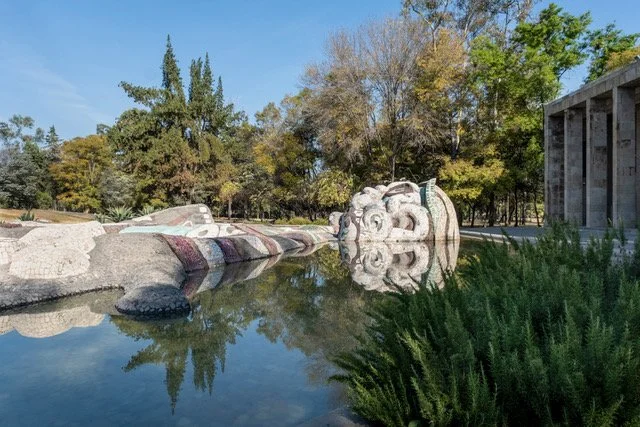
Water, Source of Life
Arriving in Mexico City, one of our first outings was to Chapultepec Park, just west of the leafy Roma neighborhood. Hidden within the park’s immense grounds is one of Diego Rivera's most extraordinary—and least expected—masterpieces.
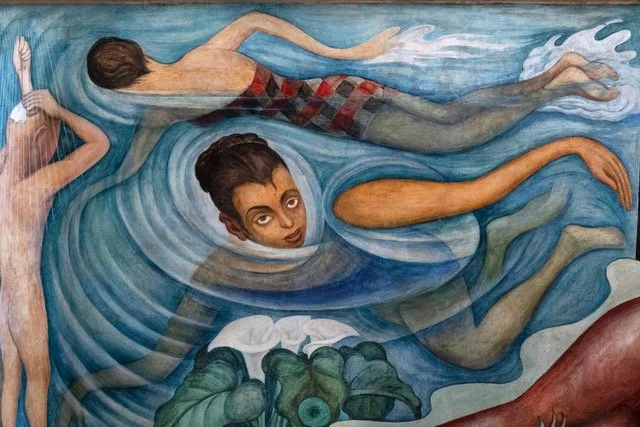
Completed in 1951, Water, Source of Life transformed a working hydraulic facility into a civic work of art. Conceived to celebrate the completion of the Lerma water system, Rivera's murals were painted directly inside the reservoir, intended to be viewed beneath moving water. The current itself animated the imagery, bringing microscopic life, swimmers, and the origins of humanity into motion.
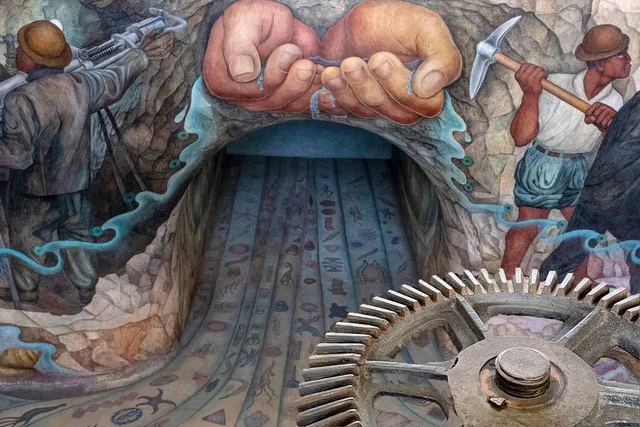
Above the channels where water once flowed, Rivera shifted his focus from mythology to the people who made the project possible. Engineers, surveyors, and laborers stand alongside the massive hydraulic gates—a tribute to the collective effort behind one of Mexico City's most ambitious public works.
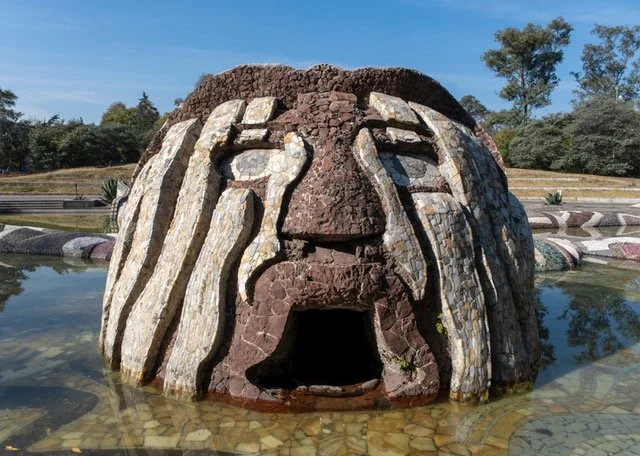
Outside, the monumental Tláloc fountain emerges from the reflecting pool, its sculptural form appearing to rise from the water itself, blurring the line between landscape, engineering, and art.
It's a remarkable reminder that infrastructure can be more than functional. At its best, it can express a society's highest aspirations, honoring not only the essential resource of water, but also the many hands that made it possible.