Reshaping a Modest Deck House
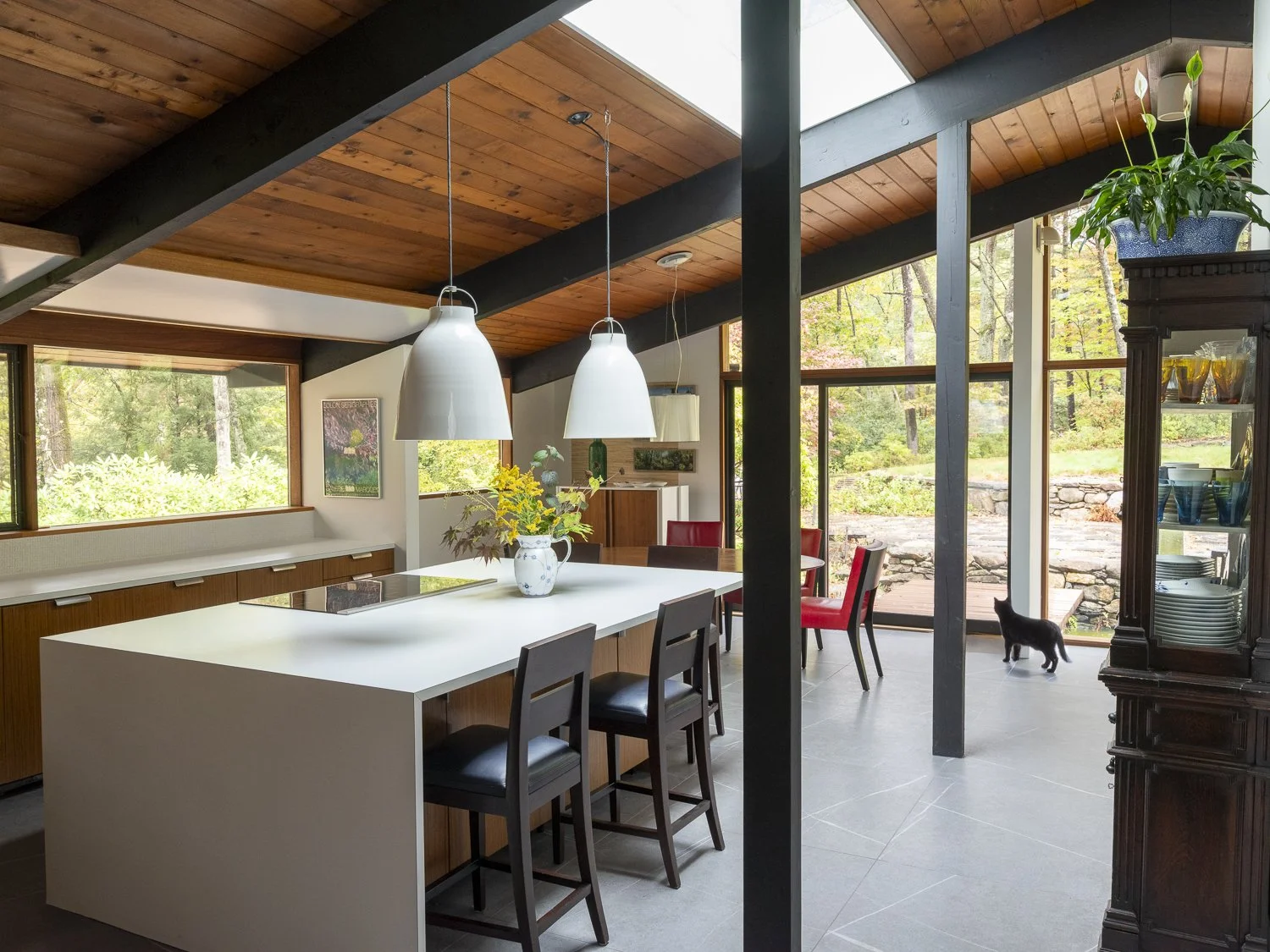
At first glance, the house is disarmingly simple—a modest mid-century Deck House tucked into the woods of Concord, Massachusetts. Prefabricated. Unpretentious. A model home assembled from catalog plan. But for its owners—an interior designer (my talented collaborator) and his husband, a landscape architect (my talented cousin)—it became an exercise in something far more elemental: the shaping of space itself.
Here, design is not about rooms or objects, but about planes—horizontal, vertical, and the subtle ways they intersect, dissolve, and extend beyond their expected limits.
In the kitchen, where the ceiling dips low along the window wall, light is pulled in from an added skylight, creating a quiet tension between enclosure and openness. In the living room, a low-slung wood counter wraps a corner, a subtle nod to Frank Lloyd Wright.
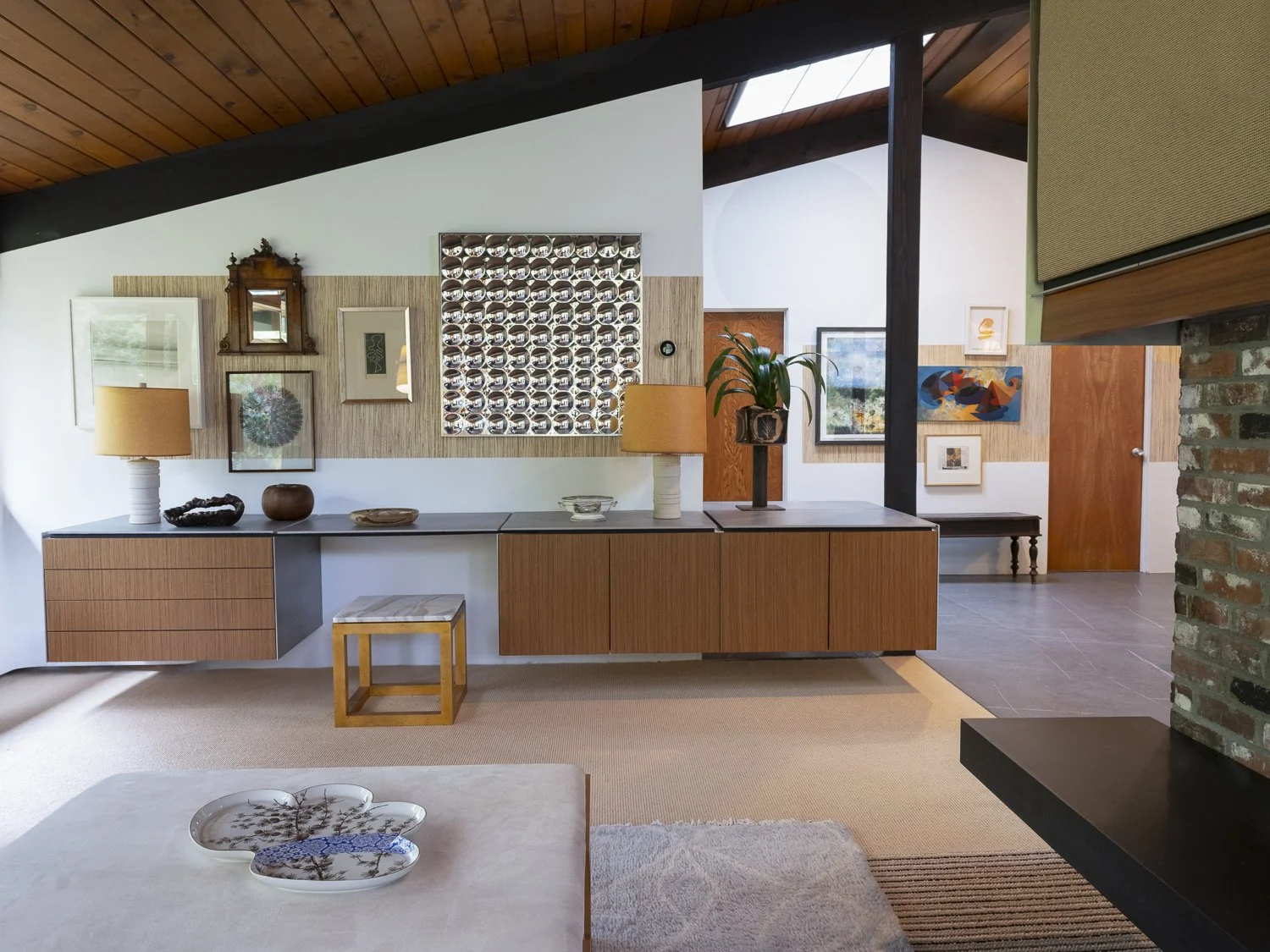
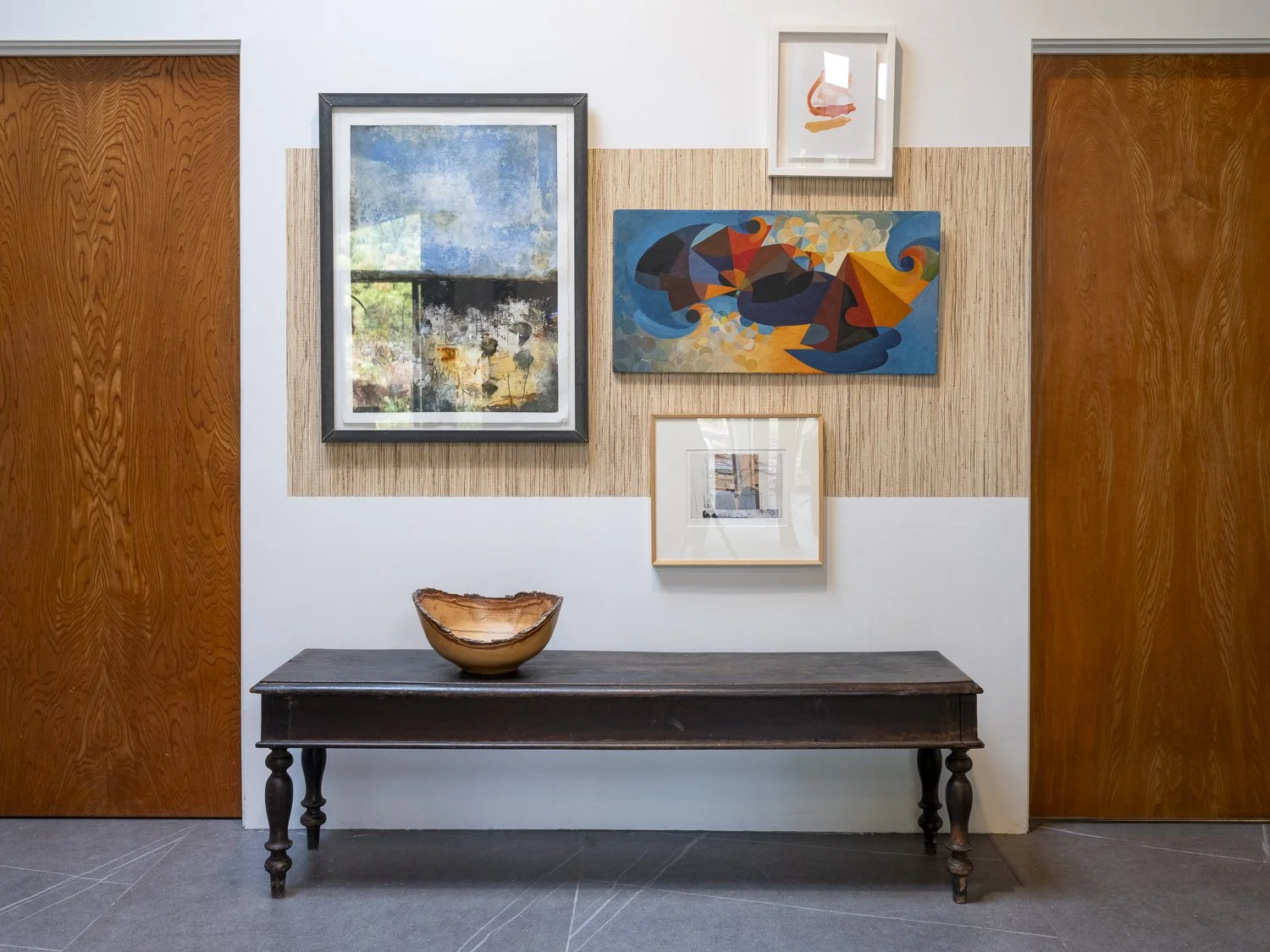
Throughout the home, the decorative elements and furnishings accumulate rather than conform. Yet even this eclecticism feels anchored by the underlying discipline of the space itself. Strip it all away, and the architecture holds.
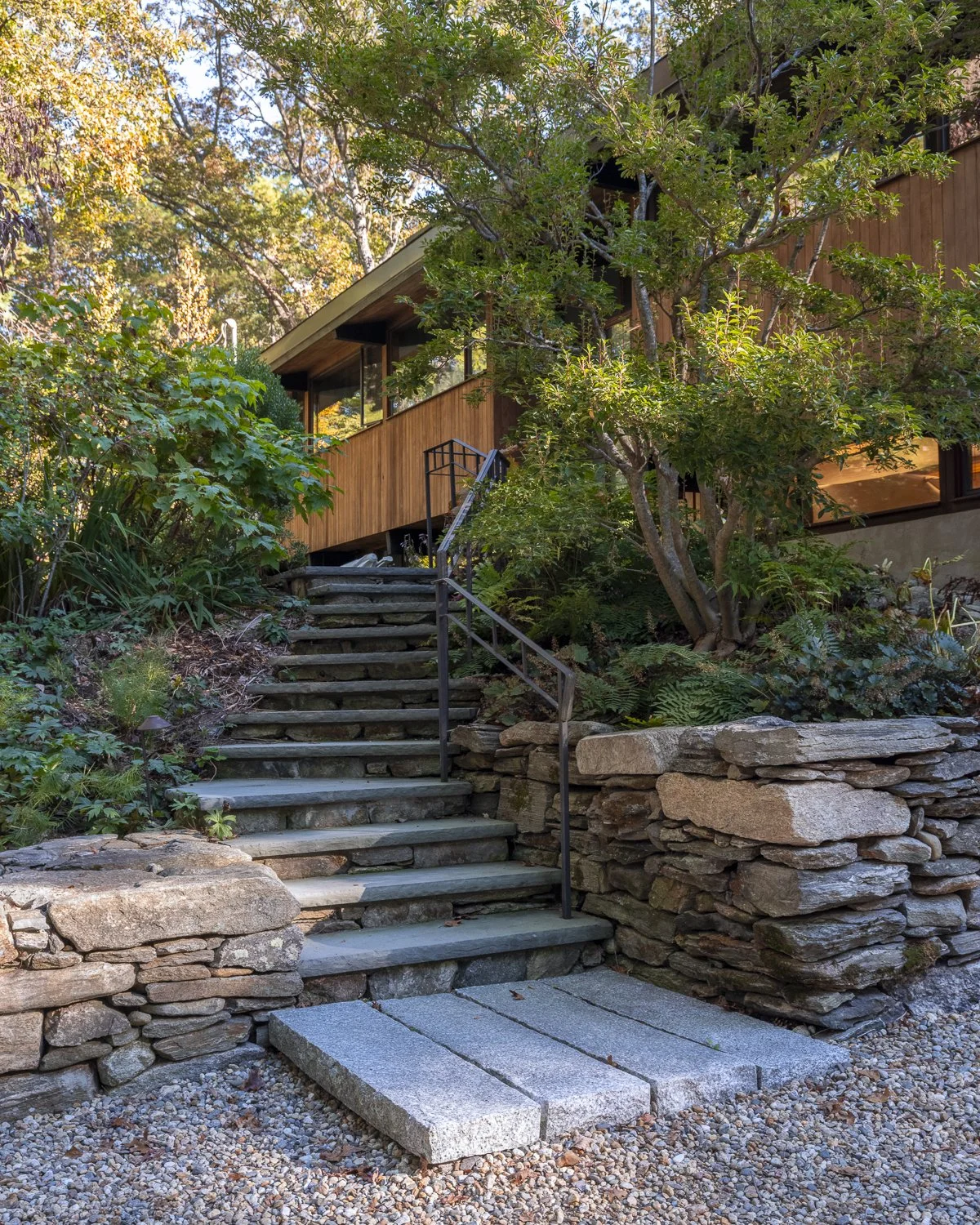
That dialogue is perhaps most evident in the relationship between the house and its site. Set low against a rising grade, the home creates a sense of quiet immersion—of being held within the landscape rather than placed upon it. Just beyond the threshold, a meditation pool sits improbably close to the foundation. To step outside is to cross a bridge, both literal and perceptual, into a garden shaped as carefully as the rooms within.
It’s here that the owners’ shared sensibility—both with California roots and a shared affinity for the coast—comes most into play. The landscape is not a backdrop, but an extension of the home’s spatial language. Views are composed with intention: a direct line outward to water, light, and movement.
That is the quiet achievement of this house. Not a transformation through luxury materials or grand gestures, but through a series of deliberate moves that reinforce a simple idea:
That space, when thoughtfully composed, is more than enough.

Photography by Pam Connolly